
Name It To Tame It!
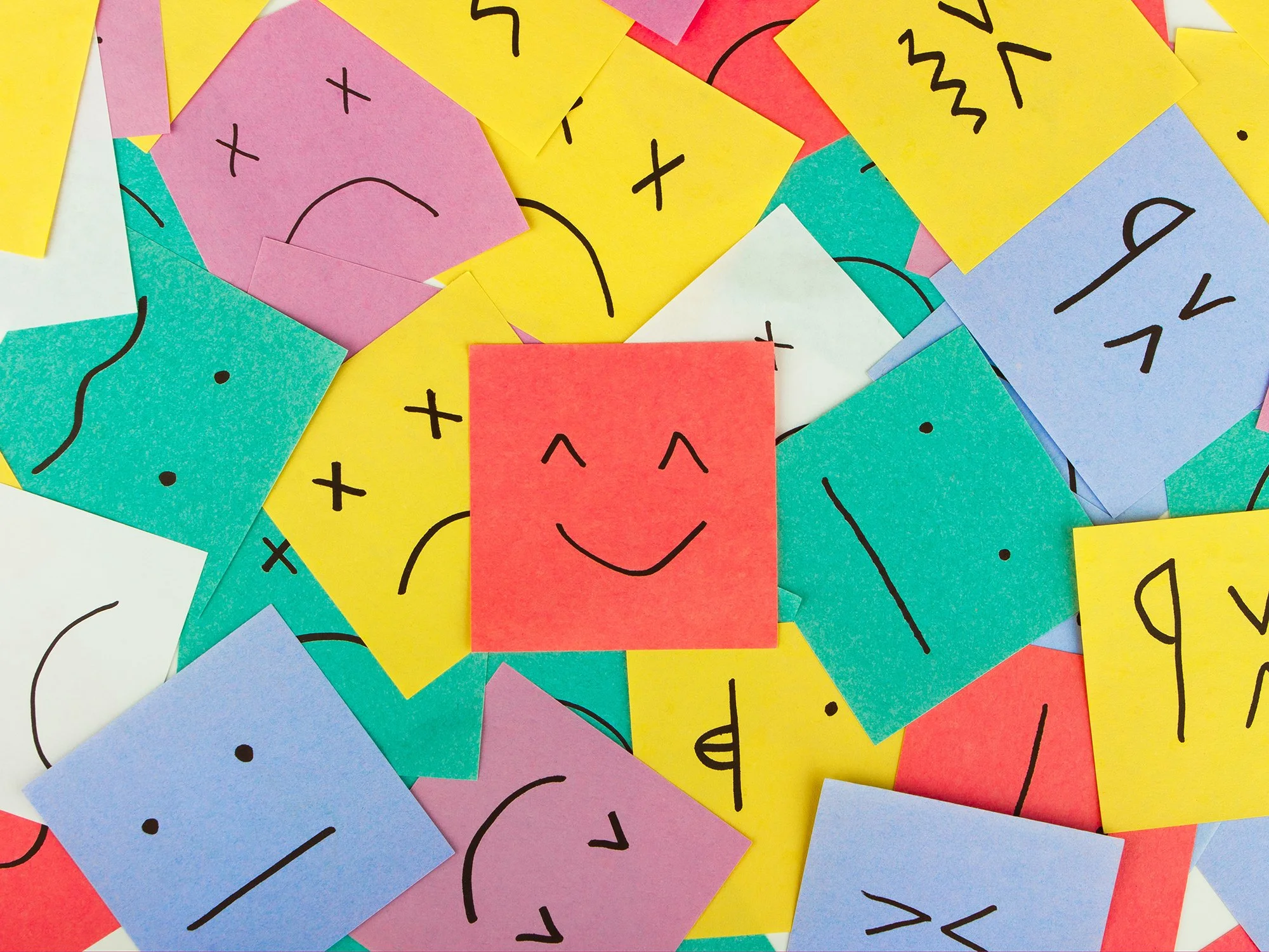
Difficult emotions have a way of convincing us they’re in charge. Stress sweeps in like a storm. Anxiety whispers worst-case scenarios. Frustration tightens our chest and leads to knee-jerk reactions. But here’s the truth most of us were never taught: feelings only have as much power as we give them.
That doesn’t mean we should ignore or suppress them. But we can learn to relate to our feelings differently—with more space and awareness. And when we do, they stop running the show.
Let me share a personal example… I recently debuted a brand new speech that I had never delivered publicly before. In the days leading up to it, I lived in a constant state of reactivity. My body felt tight. My mind kept darting between perfectionism and panic.
A friend checked in and asked me how I was feeling and I told them “stressed!” But then it hit me: I had collapsed every emotion into the one word I understood best in moments of pressure. And as long as I stayed stuck in that single label, I had no clarity, only a vague sense that something wasn’t quite right.
So I paused. I took a deep breath. And I actually turned towards the feelings….instead of compartmentalizing or swatting the emotions away.
What I discovered wasn’t just stress—it was a mix of vulnerability, anticipation, pride, fear of judgment, and genuine passion for the message I was going to share.
As soon as I named those emotions, the pressure softened. I could hold them, instead of letting them hold me. And in making that shift, the grounded, capable part of me came back online.
If you struggle with reactivity (and let’s be real, who doesn’t?), here are a few simple practices to try out:
Name It to Tame It!
One of the simplest, most powerful tools for managing difficult emotions is naming them.
“Name it to tame it” isn’t just a catchy phrase—there’s real psychological weight behind it. When you put language to what you’re feeling, it helps to move the experience from the emotional centers of the brain to the parts responsible for awareness and reasoning. The feeling becomes something you can look at, rather than something you’re drowning in.
It’s the difference between “I am stressed.” vs. “I’m feeling stressed.”
This tiny shift creates space. “I am…” fuses your identity with the emotion. “I’m feeling…” acknowledges it as a passing state. After all, feelings are something you’re experiencing, not something you are.
The Feelings Wheel
Most of us weren’t taught a large emotional vocabulary growing up. So when someone asks how we’re doing, “stressed,” “tired,” or “fine” become catch-alls for far more complex inner experiences.
That’s why I love the Feelings Wheel (and use it regularly with my coaching clients). It’s a tool that expands basic emotions into more specific ones. Instead of just “stressed,” you might discover you’re actually feeling overwhelmed, pressured, uncertain, under-supported, or unprepared
Each of these has a different story, a different cause, and a different need behind it. The more precise you can be, the more accurately you can respond and give yourself what you really need.
Especially if naming your emotions feels hard, the wheel gives you language you didn’t know you needed.
The goal isn’t to get rid of difficult feelings, it’s to reconnect with yourself underneath them. Because when you can pause long enough to ask yourself: “What exactly am I feeling?” “Where is this showing up in my body?” “Is there something this emotion is trying to tell me?” …you can step off of autopilot and into embodied awareness.
When you can stop battling your emotions and learn to simply be with them, you can rediscover the most grounded version of you—the part that wasn’t necessarily overwhelmed, just unheard. This is where your real power lives.
Mindfully yours,
Ashley